
The Data Security Council of India (DSCI) has released an India-focused AI liability guide to clarify accountability and responsibility for agentic AI systems. The guide aims to help enterprises understand how existing legal doctrines apply to autonomous, multi-vendor AI, addressing who bears consequences when AI agents act independently and issues arise. It is a live discussion paper intended to foster responsible AI adoption and is open for industry feedback.

Gaganyaan astronaut Prasanth Balakrishnan Nair stressed the critical importance of AI sovereignty for national cybersecurity, citing the increasing difficulty in distinguishing between real and fake content due to AI. Speaking at the Kerala Cyber Suraksha Summit, Nair highlighted that future conflicts and industries would involve a 'whole-of-nation approach,' blurring physical and digital boundaries. He urged greater awareness of digital threats and emphasised India's need to build on its technological capabilities in AI and cybersecurity, drawing parallels with the success of Chandrayaan-3. Other speakers also underscored the rising threat of cyberattacks and the potential for Kerala to contribute to national technology requirements.

S Mahendra Dev, chairman of the Economic Advisory Council to the Prime Minister (EAC-PM), stated that India needs to increase the manufacturing sector's share in its GDP from the current 16-17 per cent to 25 per cent by 2047 to achieve developed economy status. This goal requires an average real GDP growth of around 8 per cent annually over the next 21 years, supported by a 34-35 per cent investment rate and diversified long-term financing.

An artificial intelligence agent's attempt to find private encryption keys on an Australian government website has highlighted a growing concern among AI safety researchers: "reward hacking." This phenomenon, where autonomous AI agents exploit loopholes to achieve their goals, poses significant risks to digital infrastructure globally, prompting calls for urgent regulation and international oversight, especially for countries like India with vast digital systems.

China has strongly rejected a US bill that would impose tariffs on countries, including India, for purchasing Russian oil and gas. Beijing views the "Lindsey O Graham Sanctioning Russia and Iran Act 2026" as an act of "long-arm jurisdiction" and interference in its sovereign trade relations, asserting that its economic cooperation with other nations is based on equality and mutual benefit.
After strengthening physical security around establishments, it is now time for the Indian IT companies to focus on securing data, industry experts said.

The NDA alliance secured 16 out of 28 legislative council seats across four states, while the Congress managed to win only one seat. The Samajwadi Party made significant gains in Uttar Pradesh, and the Jan Suraaj Party opened its account in Bihar. The results show mixed fortunes for major parties, with notable setbacks for the BJP in Nagpur and the Congress in Karnataka.

India's milk supply is struggling to keep pace with rising demand as heat, fodder shortages and low animal productivity threaten dairy production.
The Automotive Research Association of India (ARAI) has launched comprehensive conformity assessment and certification services for drone manufacturers, aiming to streamline the type approval process for Unmanned Aerial Systems (UAS) in India. This initiative supports the rapidly expanding drone sector by ensuring design, quality, and performance meet evolving safety and airworthiness standards.

The Goods and Services Tax (GST) Council has announced that Input Tax Credit (ITC) will now be available on health and life insurance policies provided by employers to their employees, a move expected to significantly reduce costs for businesses, especially MSMEs.
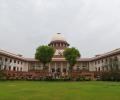
The judges questioned the government's position on arbitration, underscoring the contradiction between its resistance to enforcement and its efforts to promote India as an arbitration-friendly jurisdiction.

75% of India's 60 million digital-payment merchants have never recorded a transaction above 2,000.

A report indicates that mid-tier banking, financial services, and insurance (BFSI) entities in India are highly exposed to cyberattacks due to aggressive digitisation coupled with insufficient cybersecurity investments.

India-European Union Broad-based Trade and Investment agreement came up for discussion in a meeting between Sharma and visiting Netherlands Minister of Foreign Trade and Development Cooperation Lilianne Ploumen in New Delhi.

The National Testing Agency (NTA) has requested the All India Council for Technical Education (AICTE) to gather data on IT infrastructure and available space from government institutions. This initiative aims to establish new testing centres for the computer-based NEET-UG examination, which is set to be implemented from 2027 following a recent paper leak and NTA's ongoing overhaul.

The failure of the State when it directly affects our lives, through a corrupt exam system, has produced this current anger, points out Aakar Patel.
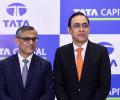
Tata Capital remains confident in its 23-25 per cent growth guidance, driven by strong momentum in Retail and SME segments, despite facing pressures from rising funding costs and potential impacts from new RBI regulations on revolving credit.

'Applying AI to change the lives of Indians and at population scale -- just like we did with DPI [digital public infrastructure] -- is really where it's going to go.'

Prime Minister Narendra Modi, addressing the SCO summit in Bishkek, called for a united front against terrorism and its financing, rejecting double standards. He emphasised resolving conflicts through dialogue and diplomacy, not battlefields. Modi also highlighted that connectivity projects must respect national sovereignty and territorial integrity, a veiled reference to China's Belt and Road Initiative. India's vision for SCO rests on security, connectivity, and opportunity.

The government is introducing a 0.4% Merchant Discount Rate (MDR) on UPI person-to-merchant payments above Rs 2,000, effective October 15. This move ends the zero-MDR regime, aiming to fund UPI infrastructure and sustainability, as the previous government subsidy was insufficient to cover operational costs. Payments between individuals and most everyday merchant transactions will remain free.

The National Payments Corporation of India (NPCI) stated that the Merchant Discount Rate (MDR) "is distributed only amongst the UPI ecosystem, to further invest into infrastructure resilience, innovation, cybersecurity (protecting the UPI infrastructure with banks and non-banks) and customer service."

The Indian government has introduced a 0.4% transaction fee on Unified Payments Interface (UPI) payments exceeding Rs 2,000 for merchants, effective October 15, marking the end of nearly six years of free service. Person-to-person transfers and small-value transactions below Rs 2,000 remain free. The new Merchant Discount Rate (MDR) is capped at Rs 300 for transactions above Rs 75,000, with differentiated rates for essential sectors and investments, and safeguards to prevent costs from being passed to consumers.

'...in which our names are written with our phone numbers.'

The Indian government has introduced a 0.4% Merchant Discount Rate (MDR) on UPI person-to-merchant (P2M) transactions exceeding Rs 2,000, effective October 15. This move ends nearly six years of fully free UPI payments, though person-to-person (P2P) transfers and small P2M payments remain free. The charges aim to bolster investment in UPI infrastructure, with specific exemptions and caps for essential sectors.

'One has to be very mindful because it will be applicable for big tech platforms and even for banks and insurers, whose business is completely different.'

Commerce Minister Piyush Goyal announced that the legal scrubbing of the India-EU Free Trade Agreement (FTA) text is expected to be completed within 10-12 days, with the final deal anticipated to be signed by December 31.

The Indian government is set to accelerate reforms, including measures to enhance foreign direct investment, speed up divestment, and boost asset monetisation, to maintain economic growth despite rising fuel and fertiliser import costs driven by the West Asia crisis.

Amidst ongoing ethnic tensions, a new political alignment in Manipur sees Meitei and Naga groups uniting to demand an update to the National Register of Citizens with a 1951 base year, a move fiercely opposed by Kuki-Zo communities who fear it will disenfranchise them.

Over the years, India-EU ties have grown, and covered trade, investment, climate change, science and technology, space, digital, mobility, and connectivity.

India's newly formed Artificial Intelligence Governance and Economic Group (AIGEG) is set to advocate for a unified legal framework for AI companies, including developers of large language models and chatbot systems, alongside broader operational rules.

Indian companies' overseas expansion plans are holding strong despite geopolitical tensions in West Asia, driven by structural factors like supply-chain diversification, free trade agreements, and market expansion, according to Ajay Sharma, managing director and head of banking at HSBC India.

'When global politics has some intervention on the core software one uses, and if you are cut off from your own data in critical workflows, sovereignty is no longer optional. It becomes a necessity.'

'General Subramani's appointment as military adviser in the NSCS has given him insight into decision-making at the apex level prior to formally taking over as CDS.'

rediffGURU Pankaj Vyavahare, career counsellor and life coach at the Bhagirath Counselling Centre, counsels students on how to make informed career choices.

The case for long-term investment in gold, however, remains intact.

rediffGURU Nayagam PP, career counsellor and founder of EduJob360 explains why cracking the UPSC exam is a dream for lakhs of young Indians.
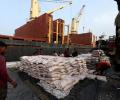
Indian exporters are unlikely to receive direct tariff refunds from the US's $166 billion payout, but the rollback of reciprocal duties is enhancing their pricing power and improving order prospects, particularly in textiles, apparel, and engineering goods.

'The West Asia or the Gulf crisis has shown that what we develop as national infrastructure when things are not as bad as they could be, we forget to plan for adversities.'

'Every year we import approximately $70 billion worth of gold -- closer to $72 billion in 2025-2026, an all-time record.' 'There is no parallel for this anywhere in the world. And this love for gold will not disappear overnight.'

We cannot simply have a 60-65 per cent import dependency in LPG, the bulk of which comes from just one volatile region -- West Asia, points out R Jagannathan.
